
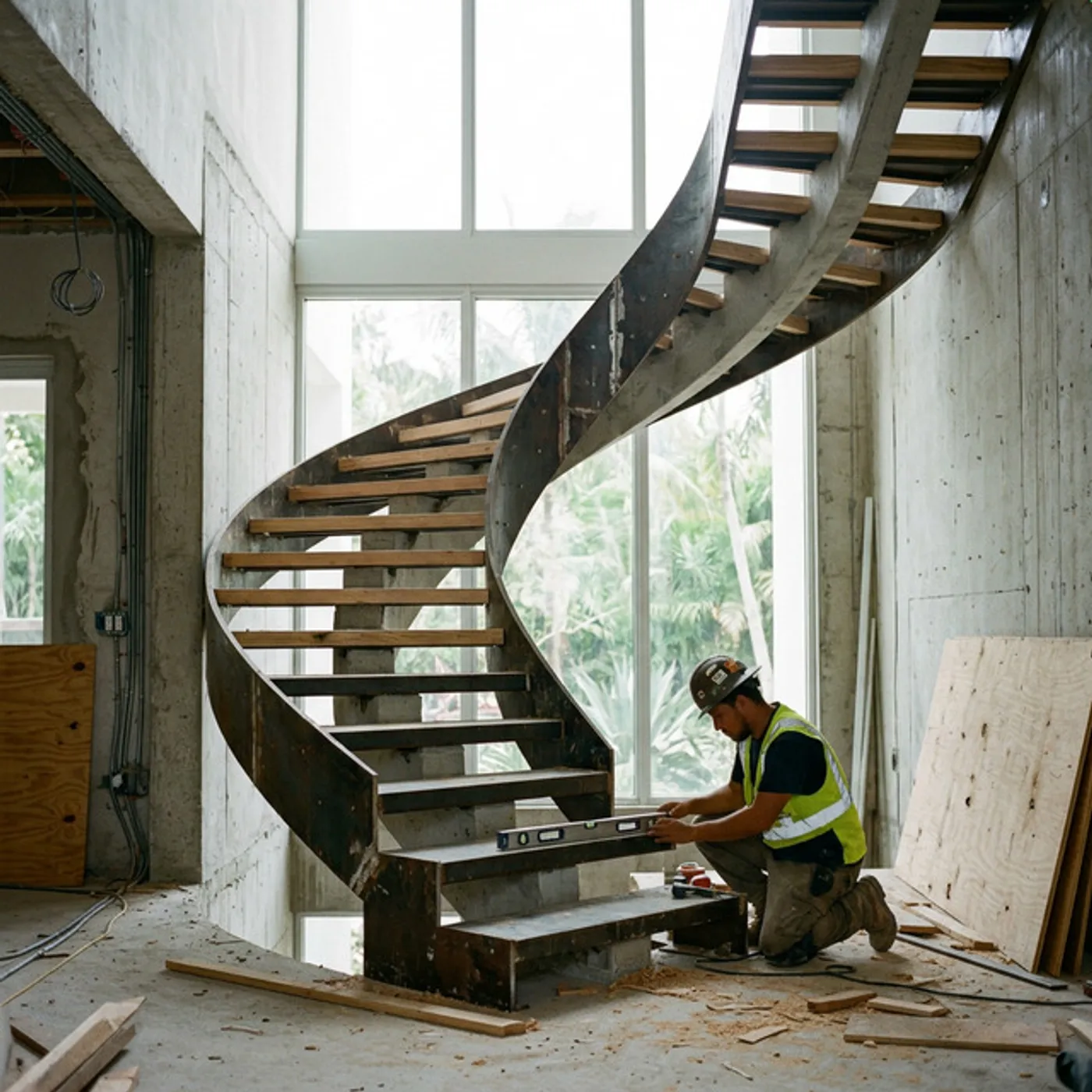
Curved Cantilevered Staircase Design & Build
Custom curved floating stairs for NYC townhouses and homes that want a non-linear centerpiece. Structural geometry done right from concept through DOB permit and installation.
At New York Floating Stairs , curved cantilevered staircases are the most complex work we do — and the most rewarding when the geometry comes together correctly. The challenge is that every curved stair is different. Radius, rise, run, and headroom clearance all interact differently depending on the space.
NYC townhouses are a natural fit for curved floating stairs. The typical layout — tall ceilings, stacked floors, visible entry from the front door — creates the spatial conditions where a curved staircase reads as an architectural focal point rather than just a means of vertical circulation.
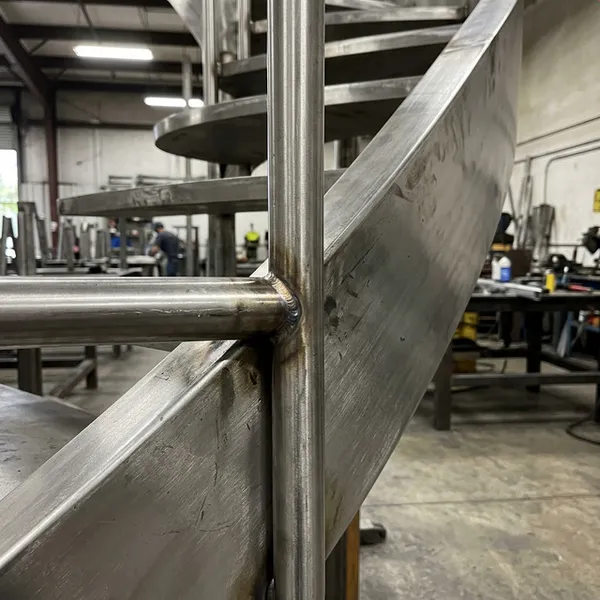
Curved floating stairs require more detailed engineering than straight systems. Tread widths vary across the sweep, the structural spine carries rotating loads, and each tread anchors into a curved wall plane that needs to be mapped and verified in the field. We approach this work with careful preconstruction planning so the install proceeds cleanly.
DOB documentation for curved cantilevered systems is more involved than standard floating stairs. We prepare the full engineering package in-house, including curved-span load calculations and connection details at every unique tread geometry.
Material options for curved systems follow the same range as straight stairs — hardwood, steel, glass treads — but fabrication lead times are longer and tolerances are tighter. We factor that into project scheduling so expectations are realistic before work begins.
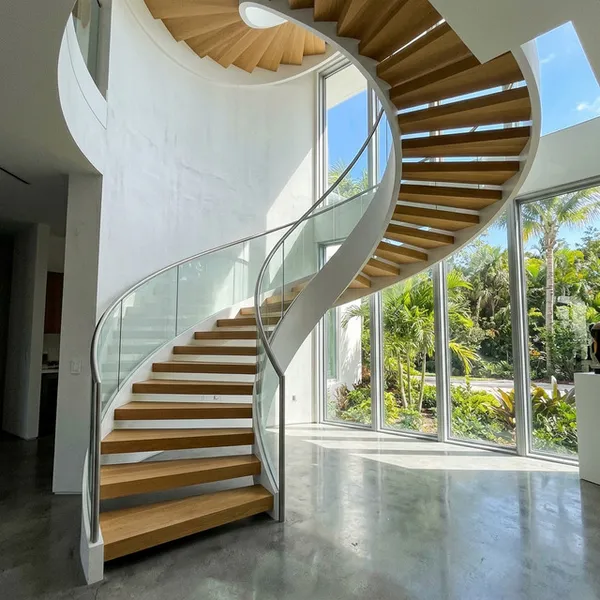
Curved geometry. NYC engineering standards.
Free site assessment to evaluate your space for curved stair feasibility.
How We Design & Build Curved Floating Stairs
FAQ: Curved Floating Stairs
What spaces work best for curved cantilevered stairs? +
How long does a curved floating stair project take? +
Can curved stairs be built in NYC pre-war buildings? +
Do you use CAD or 3D modeling for curved stair design? +
Can I choose the radius of the curve? +
Ready to explore a curved staircase?
Free site assessment to evaluate your space and advise on curved geometry options.